Artificial Intelligence is rapidly transforming how organizations operate. Across industries, leadership teams are investing in AI workflow automation, intelligent automation platforms, and business process automation initiatives to improve productivity and reduce operational costs. Yet despite growing adoption, many organizations struggle to achieve meaningful business outcomes from their investments.
The reason is surprisingly simple.
Most organizations approach automation as an efficiency initiative.
The organizations creating the greatest value from AI approach it as a decision-making initiative.
While AI workflow automation can undoubtedly reduce manual effort and streamline repetitive processes, its most significant contribution lies elsewhere. It enables organizations to move information, insights, and decisions across the business faster and more consistently than ever before.
As markets become increasingly complex and information continues to expand exponentially, competitive advantage is shifting away from organizations that simply work harder toward those that can learn, decide, and act faster.
This article explores why the future of AI workflow automation is not about saving time. It is about scaling decisions.
The Automation Misconception
For decades, automation has been associated with repetitive work.
Businesses automated payroll processing. Manufacturers automated production lines. Software companies automated reporting and data entry. The objective was straightforward: reduce manual effort and improve efficiency.
Artificial intelligence has expanded the scope of automation dramatically. Yet many organizations continue to evaluate AI through the same lens they applied to traditional automation technologies.
The prevailing assumption is that AI creates value by helping employees complete tasks more quickly.
While this is partially true, it overlooks a more important reality.
Tasks rarely create business value in isolation.
Workflows do.
Organizations often celebrate the fact that a report can be generated in minutes rather than hours. What receives far less attention is whether the report contributes to faster decisions, improved customer outcomes, or better organizational performance.
Efficiency matters.
But efficiency without impact rarely creates competitive advantage.
Why Productivity Gains Remain Elusive
One of the most common frustrations among executives is the gap between AI enthusiasm and measurable results.
Employees adopt AI tools.
Teams experiment with automation.
Pilot programs generate excitement.
Yet productivity gains often fail to materialize at scale.
The reason is that technology alone rarely transforms organizations.
An employee may use AI to create a proposal in ten minutes instead of two hours.
However, if that proposal still moves through multiple approval layers, fragmented communication channels, manual reviews, and disconnected systems, the organization experiences only marginal improvement.
The bottleneck simply moves.
Many AI initiatives fail because they optimize tasks rather than workflows.
Organizations focus on making individual activities faster while leaving the broader operating model unchanged.
The technology succeeds.
The workflow fails.
And when workflows fail, productivity gains remain elusive.
The Workflow Fragmentation Problem
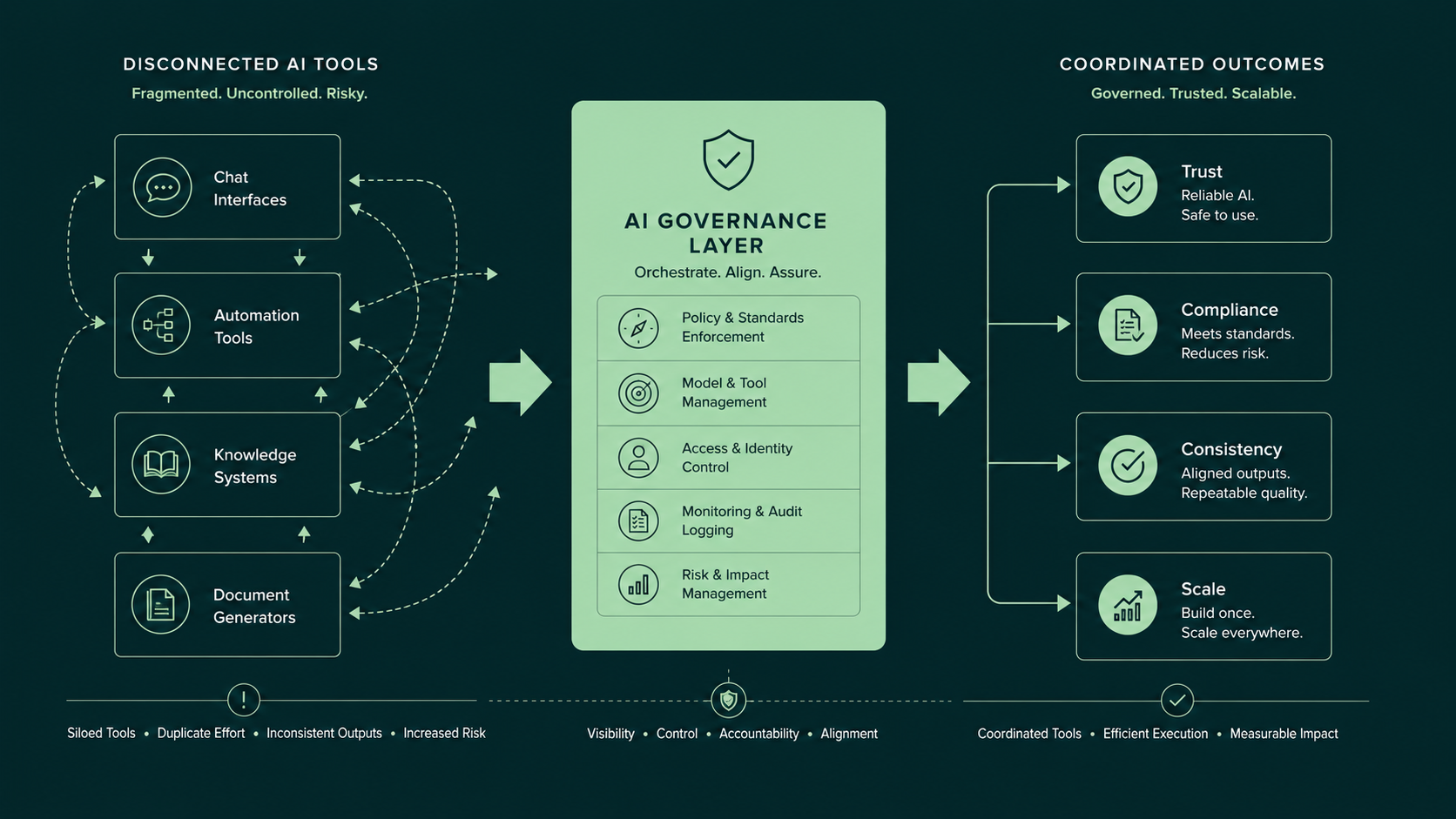
Modern organizations operate through an increasingly fragmented ecosystem of applications, departments, and information sources.
Customer information lives inside one platform.
Marketing analytics live inside another.
Operational data exists elsewhere.
Communication takes place across multiple channels.
Decision-making becomes distributed across teams.
The result is friction.
Employees spend significant amounts of time searching for information, validating data, coordinating stakeholders, and moving context from one system to another.
This friction is rarely visible on organizational charts, yet it has a profound impact on performance.
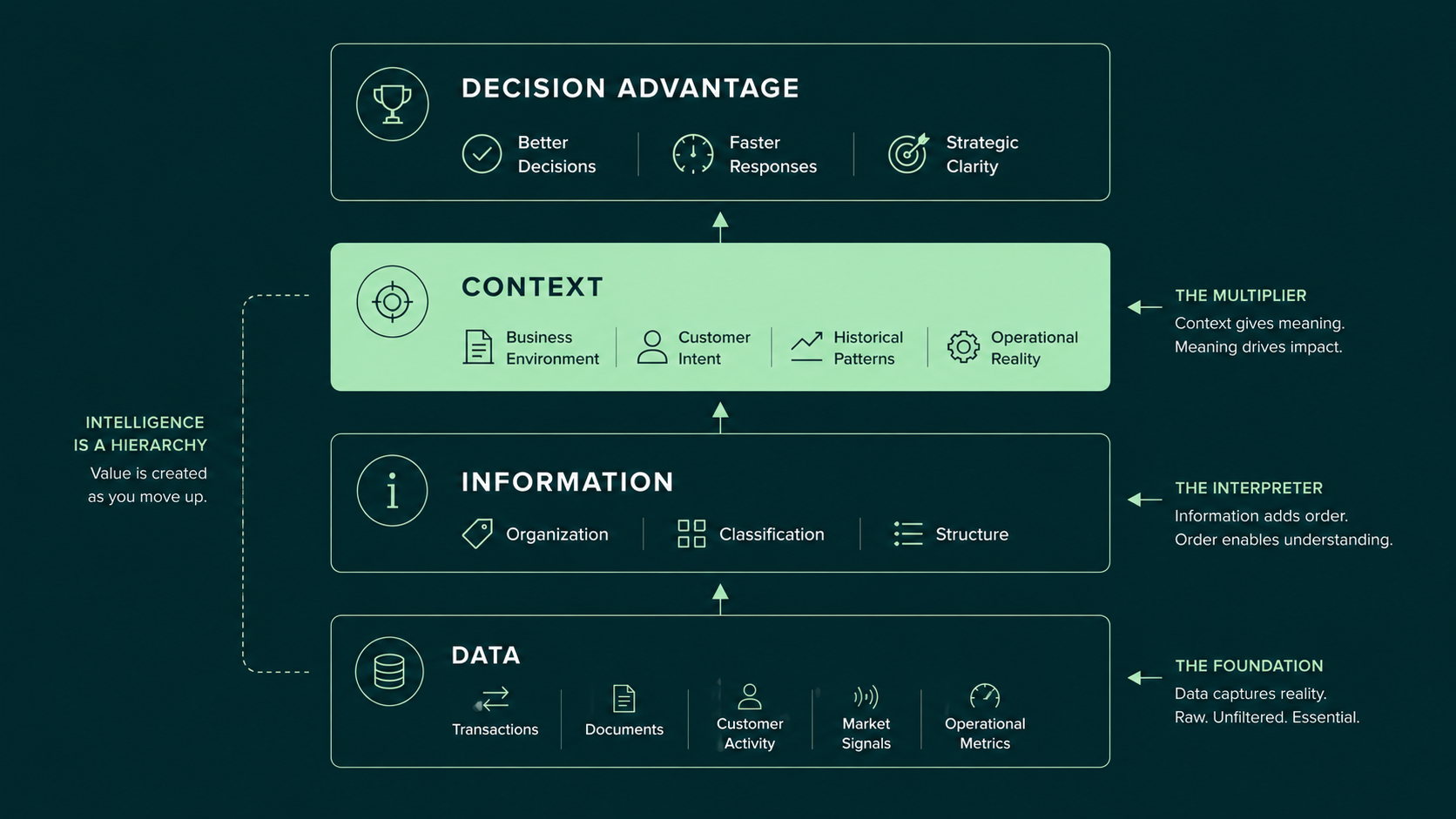
The challenge facing modern businesses is not a shortage of information.
It is the growing distance between information and action.
Reducing that distance is where AI workflow automation creates its greatest value.
Automation Versus Orchestration
Many organizations use the terms automation and orchestration interchangeably.
They are not the same thing.
Automation focuses on completing a task.
Orchestration focuses on coordinating an entire process.
The distinction is critical.
Consider customer onboarding.
A traditional automation initiative might automatically send welcome emails and create customer records.
An orchestrated AI workflow could:
- Analyze customer information
- Classify onboarding requirements
- Notify relevant internal teams
- Generate personalized implementation plans
- Identify potential risks
- Schedule follow-up actions
- Produce executive visibility reports
In the first example, a task is automated.
In the second, a workflow is orchestrated.
The difference is not efficiency.
The difference is organizational capability.
As AI systems become more sophisticated, orchestration will become increasingly important.
Organizations that master orchestration will create advantages that simple automation cannot replicate.
The Rise of AI Workflow Automation
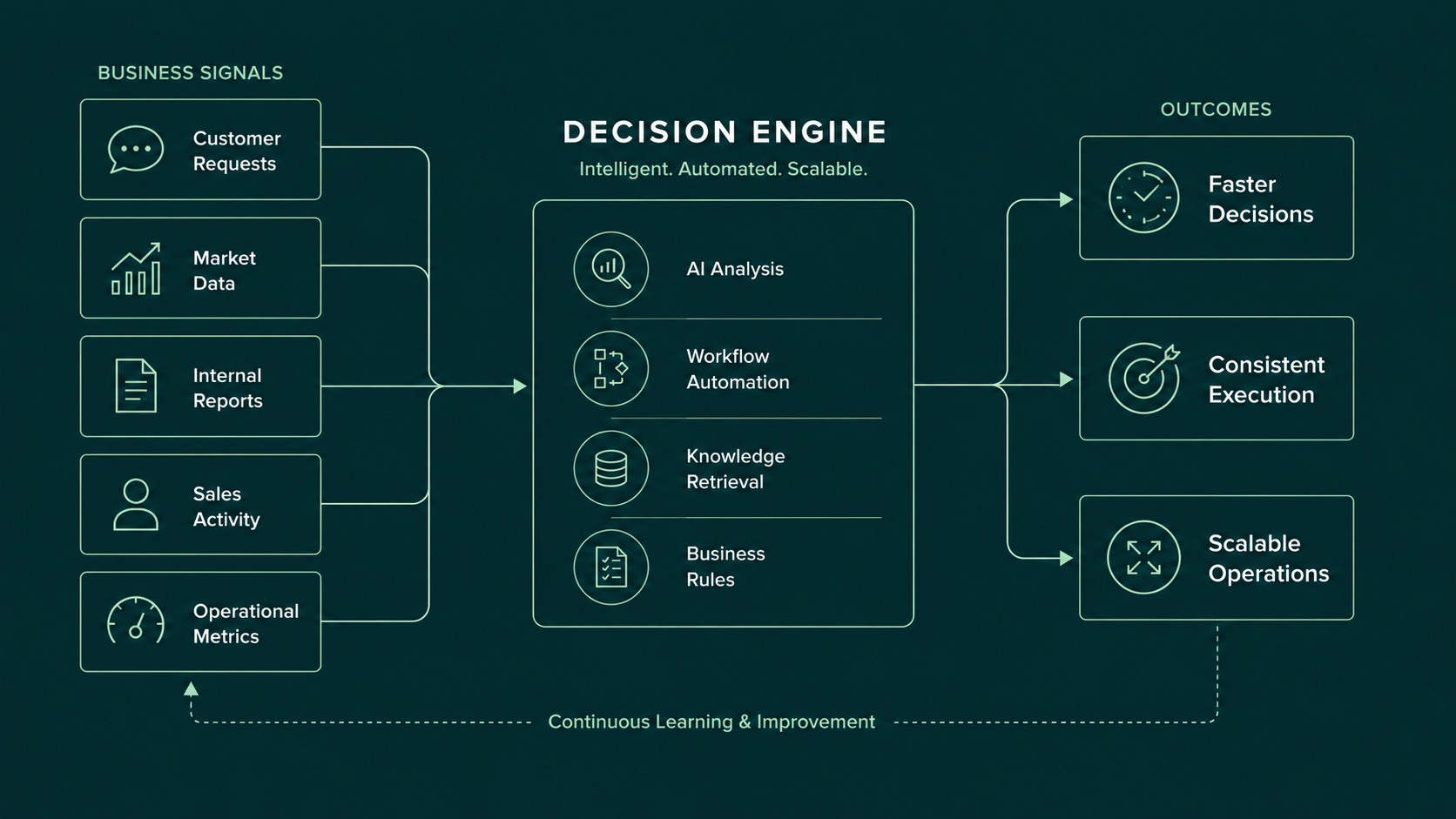
Recent advances in large language models, intelligent agents, workflow orchestration platforms, and automation technologies have fundamentally expanded what organizations can automate.
Modern AI workflows can:
- Analyze documents
- Extract structured information
- Generate content
- Summarize research
- Monitor market developments
- Classify customer requests
- Trigger downstream actions
- Support decision-making processes
This shift is important because it moves automation beyond operational efficiency and into the realm of cognitive work.
Tasks that previously depended on human interpretation can increasingly be standardized, scaled, and continuously improved.
Organizations are no longer limited to automating repetitive actions.
They can now automate portions of information processing itself.
This represents a fundamental shift in how work is performed.
The Decision Velocity Advantage
Every organization competes on decision quality.
Increasingly, organizations also compete on decision speed.
Markets evolve rapidly.
Customer expectations shift continuously.
Competitive threats emerge unexpectedly.
Organizations that require weeks to gather information, align stakeholders, and execute decisions often find themselves reacting rather than leading.
AI workflow automation reduces the distance between insight and action.
Research can be gathered automatically.
Information can be summarized instantly.
Relevant stakeholders can be notified immediately.
Recommendations can be generated continuously.
Decisions move faster because information moves faster.
This creates what might be described as decision velocity.
Decision velocity is becoming one of the defining competitive advantages of the AI era.
Organizations that consistently learn faster, decide faster, and act faster often outperform competitors operating with similar resources.
The Human-AI Operating Model
Despite concerns about workforce displacement, the most successful AI implementations rarely eliminate human involvement.
Instead, they redefine it.
Artificial intelligence excels at processing information, identifying patterns, and managing repetitive cognitive tasks.
Humans excel at judgment, creativity, ethics, leadership, and contextual understanding.
The strongest organizations design workflows that leverage both capabilities.
Machines handle scale.
Humans handle significance.
Machines process information.
Humans determine meaning.
Machines generate recommendations.
Humans make decisions.
The future of work is unlikely to be human versus machine.
It will be human amplified by machine.
Organizations that understand this distinction will build far more resilient operating models.
Building an AI Workflow Strategy
Organizations pursuing AI workflow automation should begin with strategy rather than technology.
Several principles can guide implementation.
Start With Business Outcomes
Focus on measurable outcomes rather than tool adoption.
Identify Workflow Bottlenecks
Look for delays, handoffs, approvals, and information silos.
Prioritize High-Frequency Decisions
The greatest returns often come from workflows executed repeatedly across the organization.
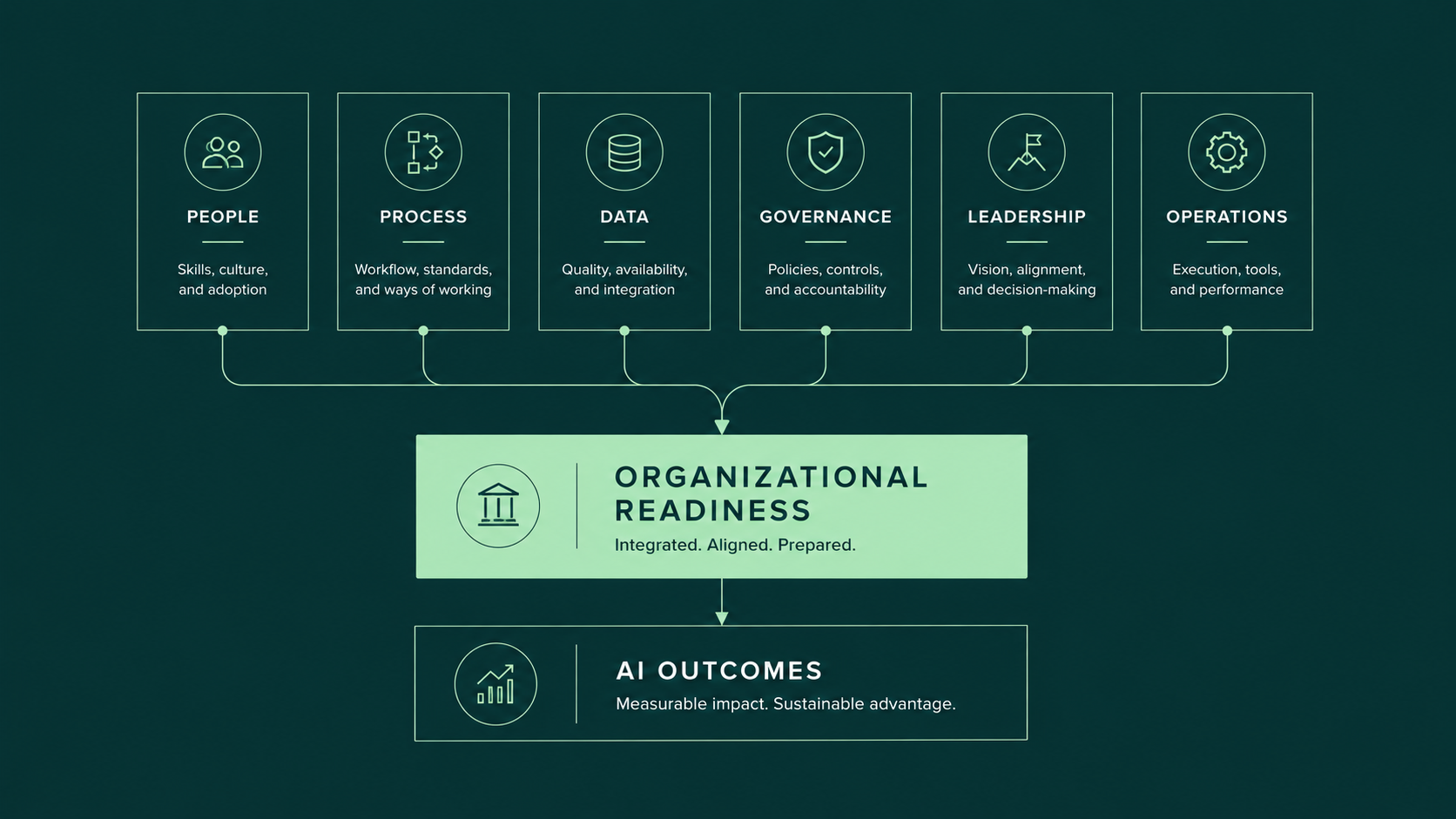
Establish Governance Early
Data security, accountability, compliance, and oversight should be designed into workflows from the beginning.
Scale Incrementally
Organizations that succeed with automation rarely attempt transformation overnight. They build capability gradually and systematically.
The objective is not to automate everything.
The objective is to automate intelligently.
Key Takeaways
The organizations creating the greatest value from artificial intelligence are not simply automating tasks.
They are redesigning workflows.
The conversation around AI productivity often focuses on time savings. While efficiency remains important, the larger opportunity lies in enabling faster, more consistent, and more scalable decision-making.
As AI capabilities continue to advance, competitive advantage will increasingly belong to organizations that can move information efficiently, orchestrate complex processes, and convert insight into action.
The question leaders should ask is no longer:
"How can we automate more work?"
The better question is:
"How can we build workflows that allow better decisions to happen at scale?"
That is where the next generation of organizational advantage will emerge.