Artificial Intelligence is rapidly becoming a core business capability. Organizations across industries are investing in AI tools, developing AI adoption roadmaps, experimenting with AI workflow automation, and searching for ways to improve productivity through intelligent systems. Yet despite growing investment and widespread enthusiasm, many organizations continue to struggle with implementation.
Employees adopt AI tools faster than leadership can govern them. New technologies are introduced without clear policies. Sensitive business information is shared without adequate safeguards. Automation initiatives begin with excitement but fail to scale beyond isolated experiments.
The challenge is not access to AI.
The challenge is organizational readiness.
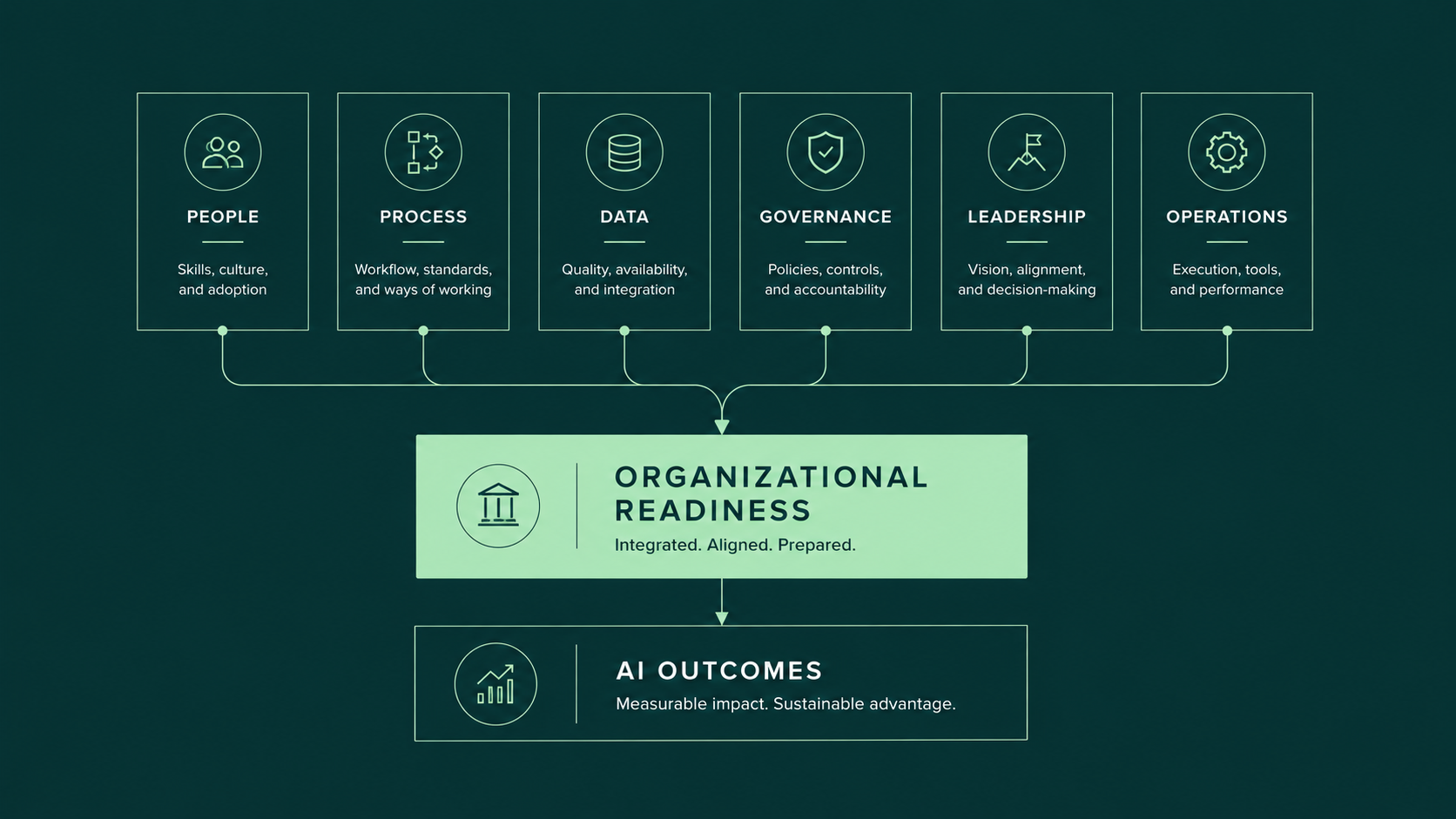
As artificial intelligence becomes embedded in daily operations, organizations must look beyond adoption and focus on the foundations that enable sustainable success. AI readiness encompasses governance, workforce capability, data management, operational integration, leadership alignment, and risk management. Without these foundations, AI can create as much complexity as value.
This article explores why organizational readiness—not technology adoption—will determine which organizations create lasting advantage in the age of artificial intelligence.
The Capability Paradox
Every technological revolution produces a paradox.
The more accessible a technology becomes, the less value is created by merely having access to it.
The internet was once a competitive advantage. Today, every business has a website. Cloud computing was once a differentiator. Today, it is standard infrastructure. The same pattern is beginning to emerge with artificial intelligence.
Only a few years ago, access to advanced AI systems was limited to large technology companies and research institutions. Today, a student, a startup founder, and a Fortune 500 executive can access remarkably similar capabilities through a web browser.
This is extraordinary progress. It is also the reason many organizations are asking the wrong question.
They are asking:
"How do we adopt AI?"
When the more important question is:
"How do we create advantage from AI when everyone else has access to the same technology?"
The answer lies not in the technology itself but in the organization's ability to integrate, govern, and operationalize it.
Technology is becoming abundant.
Readiness remains scarce.
And scarcity is where competitive advantage is created.
The Adoption–Readiness Gap
Most leadership teams believe they are evaluating AI adoption.
Their employees, however, have already moved ahead.
Across organizations, individuals are using AI to summarize meetings, draft proposals, generate reports, conduct research, create content, analyze spreadsheets, and support decision-making. In many cases, these activities occur without formal training, approved guidelines, or organizational oversight.
This phenomenon is often described as Shadow AI.
While the term may sound alarming, the existence of Shadow AI reveals something important. Employees are not waiting for organizational transformation programs. They are solving immediate problems using the tools available to them.
The gap emerges when employee adoption outpaces organizational readiness.
Leadership believes the organization is exploring AI.
Employees are already integrating it into their daily work.
Governance remains incomplete.
Policies remain undefined.
Training remains inconsistent.
Data protection standards remain unclear.
This is what we call the Adoption–Readiness Gap: the growing distance between the speed at which AI is being adopted and the speed at which organizations are learning to govern it.
The wider this gap becomes, the greater the operational and strategic risk.
Activity Without Advantage
The current AI landscape is filled with activity.
Organizations proudly announce pilot projects, experimentation initiatives, innovation labs, and AI task forces. Employees test new tools every week. Vendors promise transformation at unprecedented speed.
Yet activity and advantage are not the same thing.
History is filled with examples of organizations that enthusiastically adopted new technologies without creating meaningful business value.
The reason is simple.
Technology can increase activity immediately.
Creating advantage requires organizational change.
An AI-generated report is not necessarily a better report.
An automated process is not necessarily a better process.
A faster decision is not necessarily a better decision.
Organizations often mistake motion for progress because motion is visible. Progress is harder to measure.
Real advantage emerges only when AI contributes to better outcomes: stronger decisions, faster learning cycles, improved customer experiences, lower operational friction, and measurable business growth.
Without those outcomes, AI remains an interesting experiment rather than a strategic capability.
The Five Foundations of AI Readiness
If readiness is the true challenge, what does readiness actually look like?
Across industries, successful organizations tend to build five foundational capabilities before attempting large-scale AI transformation.
Strategic Readiness
Organizations must understand why they are pursuing AI and how it supports broader business objectives. AI initiatives disconnected from strategy rarely survive beyond experimentation.
Data Readiness
Artificial intelligence depends on information. Organizations must understand the quality, accessibility, ownership, and classification of their data before expecting meaningful outcomes.
Governance Readiness
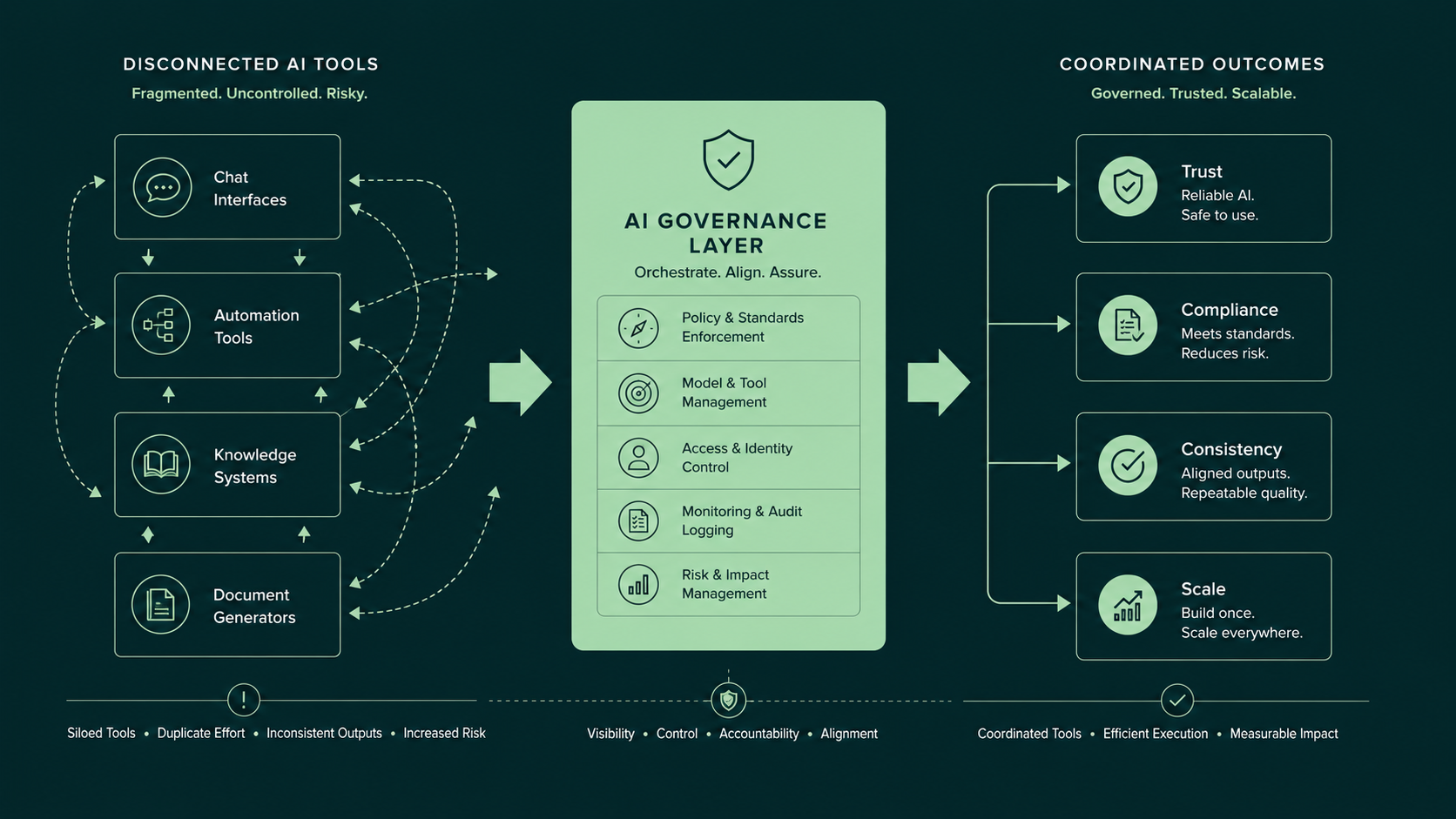
An effective AI governance framework establishes clear policies regarding acceptable usage, approved tools, accountability, risk management, and compliance obligations.
Workforce Readiness
Employees require more than access to technology. They need education, practical guidance, and a clear understanding of how to use AI responsibly and effectively.
Operational Readiness
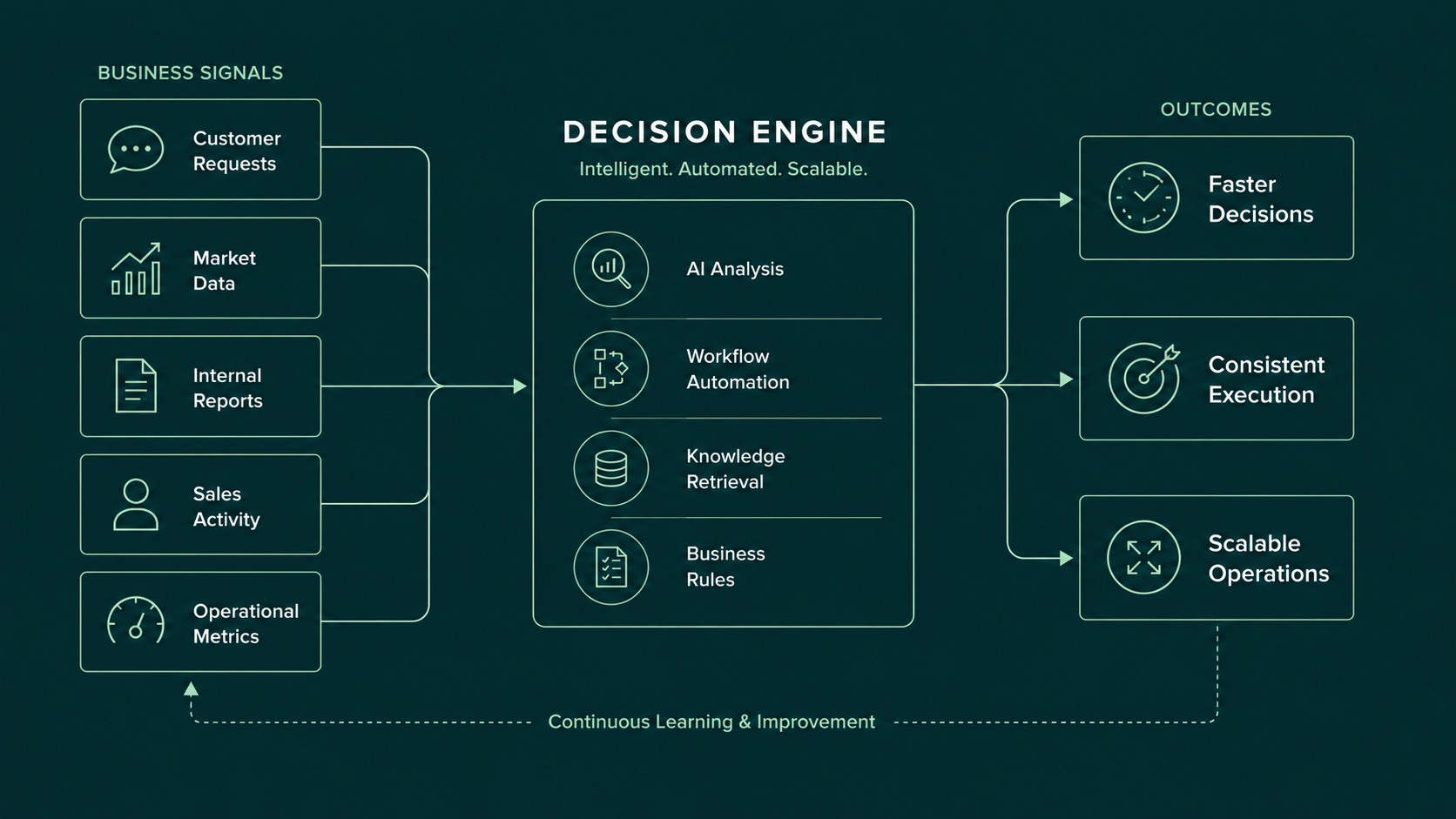
Organizations must identify where AI workflow automation can create measurable value and how those capabilities integrate into existing business processes.
Weakness in any one of these foundations can undermine progress across all others.
Readiness is not built through technology purchases.
It is built through organizational capability.
Innovation Without Control
One of the most damaging misconceptions in the AI conversation is the belief that governance and innovation exist in opposition to one another.
They do not.
Organizations that scale AI successfully are rarely those with the fewest controls. More often, they are the organizations that establish clear guardrails early and then innovate confidently within them.
Without governance, organizations expose themselves to unnecessary risks.
Sensitive information may be uploaded into public AI systems.
Employees may rely on inaccurate outputs without verification.
Compliance requirements may be overlooked.
Decision-making processes may become opaque.
These are not technology problems.
They are governance problems.
The purpose of governance is not to slow innovation.
The purpose of governance is to make innovation sustainable.
The organizations that will lead in the AI era will not be those moving recklessly fast. They will be those moving deliberately fast.
The New Organizational Capability
Many organizations continue to think about AI as though it were a software category.
This mindset is limiting.
Artificial intelligence should be viewed as an organizational capability.
Capabilities outlast tools.
Capabilities survive platform changes.
Capabilities create resilience.
Consider the organizations that excel at innovation, customer service, operational excellence, or strategic decision-making. Their advantage rarely comes from a single technology. It comes from a system of processes, behaviors, skills, and leadership practices that reinforce one another.
AI is no different.
The long-term winners will not be organizations with the most tools.
They will be organizations that develop superior capabilities for learning, adapting, automating, and making decisions.
The technology may be widely available.
The capability will not be.
The Question Leaders Are Not Asking
Many executive conversations begin with questions about platforms, vendors, and implementation.
Which AI tool should we use?
Which model should we adopt?
Which vendor should we partner with?
These questions matter.
But they are not the most important questions.
A more strategic question is this:
Is our organization prepared for AI?
Do we have the governance structures required to manage risk?
Do we understand where AI workflow automation creates the greatest value?
Do employees know how to use AI responsibly?
Have we established a clear AI adoption roadmap?
Can we scale adoption without compromising security, compliance, or quality?
These questions shift the conversation away from technology and toward organizational capability.
That is where lasting advantage is created.
The Readiness Imperative
Over the next decade, artificial intelligence will become increasingly accessible. The capabilities that appear revolutionary today will become standard features of everyday business operations. Models will improve, costs will fall, and access will expand. What feels innovative today will eventually become commonplace.
When that happens, access to AI will no longer be a source of competitive advantage.
Readiness will.
The organizations that thrive in the age of AI will not necessarily be those with the largest technology budgets, the most advanced models, or the fastest adoption rates. They will be the organizations that invest in the foundations required to scale AI responsibly and effectively.
Some organizations will approach AI as a software purchase.
Others will approach it as a capability-building exercise.
The first group will generate activity.
The second will generate results.
The challenge facing leaders today is therefore not adoption. In many organizations, employees have already solved that problem. The real challenge is creating the organizational readiness required to transform AI from an interesting technology into a sustainable source of value.
That challenge may become one of the defining leadership priorities of the decade.